

 Call Jumeirah
Orthodontic treatment has evolved significantly over the years. What was once limited to metal braces is now a much broader field with multiple treatment options designed to suit different lifestyles, ages, and clinical needs. One of the most common questions patients ask today is about clear aligners vs braces and which option is truly better.
The answer is not one-size-fits-all. Both clear aligners and traditional braces are effective orthodontic solutions, but they work differently and suit different patients. Understanding the differences helps patients make confident, informed decisions about their orthodontic care.
At DentisTree Dental Clinic, orthodontic treatment planning is always personalised. The focus is not just on straightening teeth, but on achieving healthy alignment, proper bite function, and long-term stability.
Understanding Orthodontic Treatment Goals
Before comparing clear aligners vs metal braces, it is important to understand the purpose of orthodontic treatment. Orthodontics is not only about appearance. Proper alignment improves:
- Bite function
- Chewing efficiency
- Speech clarity
- Jaw comfort
- Oral hygiene and long-term dental health
Crowded or misaligned teeth are harder to clean and more prone to decay and gum disease. Bite issues can also lead to jaw strain, headaches, and uneven tooth wear. Orthodontic treatment addresses these functional concerns while also improving aesthetics.
What Are Traditional Braces
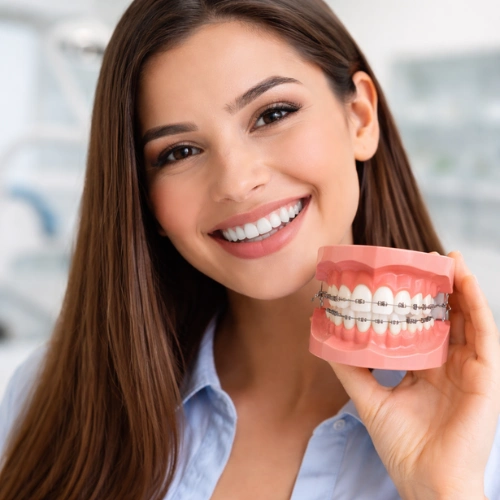
Traditional braces have been used for decades and remain a reliable orthodontic solution. They consist of metal brackets attached to the teeth and connected by wires, which are adjusted periodically to move teeth into the desired position.
How Braces Work
Braces apply continuous pressure to the teeth, gradually guiding them into alignment. Adjustments are made at regular intervals to maintain progress.
Types of Braces
While metal braces are the most common, other options include ceramic braces and lingual braces. However, metal braces remain the most durable and effective for complex cases.

What Are Clear Aligners
Clear aligners are a modern orthodontic option designed to straighten teeth using a series of custom-made, transparent trays. These aligners fit snugly over the teeth and are changed every few weeks as treatment progresses.
One of the most well-known clear aligner systems is Invisalign, which uses advanced digital planning to guide tooth movement with precision.
How Clear Aligners Work
Clear aligners work by applying gentle, controlled pressure to specific teeth. Each new set of aligners moves the teeth slightly closer to their final position.
Patients typically wear aligners for 20 to 22 hours a day, removing them only for eating, drinking, and oral hygiene.
Clear Aligners vs Braces: Key Differences
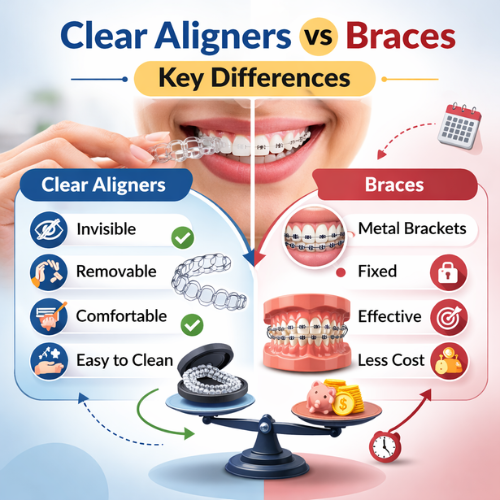
When comparing Invisalign vs traditional braces, several factors come into play. Each option has its own advantages and limitations.
Appearance and Aesthetics
One of the biggest reasons patients choose clear aligners is appearance.
Clear Aligners
- Virtually invisible when worn
- Ideal for adults and teens concerned about aesthetics
- Suitable for professional and social settings
Braces
- Metal brackets are visible
- Some patients may feel self-conscious
- Ceramic options are less noticeable but still visible
For patients prioritising discretion, clear aligners have a clear advantage.
Comfort and Daily Experience
Comfort plays a major role in orthodontic treatment, especially for long-term wear.
Clear Aligners
- Smooth, custom-made trays
- Less irritation to cheeks and lips
- No wires or brackets causing friction
Braces
- Brackets and wires may cause irritation initially
- Adjustments can lead to temporary soreness
- Wax may be needed for comfort
While both options involve some pressure as teeth move, many patients find clear aligners more comfortable overall.
Oral Hygiene and Maintenance
Maintaining oral hygiene during orthodontic treatment is essential.
Clear Aligners
- Removable for brushing and flossing
- Easier to maintain oral hygiene
- Lower risk of plaque buildup if worn correctly
Braces
- Require careful cleaning around brackets and wires
- Higher risk of plaque accumulation if hygiene is poor
- Special brushes or tools often needed
For patients who prioritise ease of cleaning, clear aligners are often more convenient.
Dietary Restrictions
Food choices are another important consideration.
Clear Aligners
- Removed while eating
- No food restrictions
- Easier to maintain normal diet
Braces
- Certain foods must be avoided
- Hard, sticky, or chewy foods can damage brackets
- Dietary adjustments are necessary
Clear aligners allow greater flexibility in daily eating habits.
Treatment Effectiveness and Complexity
When it comes to effectiveness, both options work well, but case complexity matters.
Braces
- Highly effective for complex cases
- Suitable for severe crowding, bite issues, and jaw alignment
- Continuous force ensures consistent movement
Clear Aligners
- Best suited for mild to moderate alignment issues
- Effective for spacing, crowding, and minor bite problems
- May have limitations in very complex cases
At DentisTree, orthodontic specialists assess each case carefully to recommend the most effective option.
Compliance and Responsibility
Patient cooperation plays a bigger role with aligners.
Clear Aligners
- Must be worn consistently for optimal results
- Success depends on patient discipline
- Missed wear time can delay progress
Braces
- Fixed to the teeth
- Do not rely on patient compliance
- Progress continues regardless of daily habits
For younger patients or those concerned about consistency, braces may be a more reliable choice.
Treatment Duration
Treatment time varies depending on individual needs.
- Clear aligner treatment often ranges from 6 to 18 months
- Braces may take 12 to 24 months or longer for complex cases
Neither option is inherently faster. The key factor is proper planning and consistent follow-up.
Invisalign Advantages Over Braces
For suitable cases, Invisalign advantages over braces include:
- Discreet appearance
- Removable convenience
- Easier oral hygiene
- Greater comfort
- Fewer lifestyle restrictions
These benefits make clear aligners a popular choice among adults and working professionals in Dubai.
Clear Aligners vs Metal Braces for Teenagers
Both options can work well for teenagers, depending on maturity and responsibility.
- Teens who can commit to wearing aligners consistently may benefit from clear aligners
- Braces may be better for teens who prefer a fixed option
Parental guidance and orthodontic assessment play an important role in this decision.
Best Orthodontic Option in Dubai: Why Personalisation Matters
There is no universal “best” orthodontic option. The best orthodontic option in Dubai depends on:
- Alignment complexity
- Age and growth stage
- Lifestyle and profession
- Aesthetic preferences
- Commitment to treatment
At DentisTree Dental Clinic Dubai, orthodontic treatment begins with a detailed evaluation using digital scans and imaging to design a personalised plan.
Life After Orthodontic Treatment: Retainers Matter
Regardless of whether clear aligners or braces are chosen, retention is essential after treatment.
Retainers help:
- Maintain new tooth positions
- Prevent relapse
- Protect long-term results
Skipping retainers can undo months or years of treatment, making them a critical final step.
Orthodontic Expertise at DentisTree Dental Clinic
At DentisTree Dental Clinic Dubai, orthodontic care combines advanced technology with a patient-centred approach. The team focuses on:
- Accurate diagnosis
- Personalised treatment planning
- Clear communication
- Long-term stability and function
Patients are guided through every stage of treatment, ensuring comfort, confidence, and predictable outcomes.
When to Consult an Orthodontic Specialist
If you are considering orthodontic treatment or unsure which option suits you best, a professional consultation is the first step.
Early evaluation helps identify the most effective and efficient treatment approach.
Making the Right Choice for Your Smile
Clear aligners and braces both offer reliable paths to a healthier, straighter smile. The right choice depends on your needs, lifestyle, and orthodontic goals.
A well-aligned smile improves not only appearance but also comfort, function, and long-term oral health.
Let’s Find the Best Orthodontic Option for You
If you are exploring clear aligners vs braces and want expert guidance, DentisTree Dental Clinic Dubai is here to help.
Contact us on WhatsApp for quick assistance:
📍 Al Barsha Branch: +971 58 581 5201
📍 Jumeirah Branch: +971 56 608 4766
Your orthodontic journey deserves clarity, confidence, and personalised care. A healthier smile begins with the right choice.