

 Call Jumeirah
A sudden sharp pain while drinking something hot or cold can make even simple moments uncomfortable. We often see patients ignore this discomfort until it starts affecting their daily routine. Understanding tooth sensitivity causes is the first step toward finding relief and protecting your long-term oral health.
At DentisTree Dental clinic, we believe dental care should be preventive, comfortable, and personalised. Whether your sensitivity is occasional or persistent, identifying the real cause can make all the difference. This guide will help you understand why tooth sensitivity happens and what you can do about it.
What Is Tooth Sensitivity?
Tooth sensitivity, also known as dentin hypersensitivity, happens when the protective outer layer of the tooth (enamel) becomes worn down or when gums recede, exposing the inner layer called dentin. Dentin contains tiny tubules that connect to the nerves inside the tooth. When hot, cold, sweet, acidic, or even cold air reaches these tubules, it can trigger a sudden, sharp pain.
This sensitivity may affect one tooth, several teeth, or sometimes the entire mouth. For some patients, it comes and goes. For others, it becomes a regular problem that interferes with eating, drinking, and oral hygiene. The good news is that it is treatable and in many cases, preventable.
Common Causes of Tooth Sensitivity
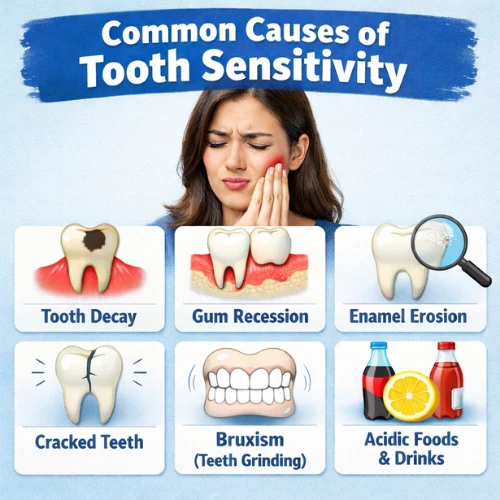
To manage sensitivity properly, it’s important to understand what may be triggering it. Several dental issues can lead to exposed dentin or irritated nerves.
1. Enamel Erosion
Enamel is the hard outer layer that protects your teeth. Over time, acidic foods, soft drinks, citrus fruits, or acid reflux can weaken and wear away enamel. Once that protective layer thins out, the underlying dentin becomes more vulnerable.
2. Aggressive Brushing
Many patients think brushing harder means brushing better—but that’s not true. Using a hard-bristled toothbrush or brushing too aggressively can wear down enamel and damage the gum line. This is one of the most overlooked causes of sensitivity.
3. Gum Recession
When gums pull away from the teeth, the roots become exposed. Tooth roots do not have the same enamel protection as the crown of the tooth, making them far more sensitive to temperature changes and touch. Gum recession may happen due to gum disease, aging, or improper brushing technique.
4. Tooth Decay or Cavities
A cavity can create direct pathways for food, drinks, and bacteria to irritate the inner tooth. Sometimes what feels like “sensitivity” is actually an early sign of decay. That’s why any persistent pain should be professionally evaluated.
5. Teeth Grinding (Bruxism)
Grinding or clenching teeth, especially during sleep, can slowly wear down enamel and create tiny cracks in the teeth. This not only increases sensitivity but can also lead to jaw pain, headaches, and long-term damage if untreated.
6. Cracked or Chipped Teeth
Even a small crack can expose dentin or allow temperature changes to affect the nerve inside the tooth. Cracks may not always be visible, which is why dental examination is important when sensitivity appears suddenly in one specific tooth.
7. Recent Dental Procedures
Some patients experience temporary sensitivity after teeth whitening, deep cleaning, fillings, or crowns. This is usually short-term and resolves within a few days, but if it continues, your dentist should reassess the tooth.
Signs You Should Not Ignore
Tooth sensitivity is common, but it should not be dismissed, especially if it becomes frequent or intense. Here are signs that indicate it’s time to visit a dentist:
- Pain when eating hot, cold, sweet, or sour foods
- Discomfort while brushing or flossing
- Sensitivity focused on one tooth
- Pain that lingers after the trigger is gone
- Sensitivity that worsens over time
- Associated gum swelling or visible wear near the gum line
If sensitivity is interfering with daily activities, it’s more than a minor issue; it’s a sign that something needs attention.
How to Manage Tooth Sensitivity at Home
Many patients ask how to manage sensitive teeth before they come in for treatment. While home care can help reduce discomfort, it works best when paired with a proper diagnosis from your dentist.
Use a Desensitizing Toothpaste
Special toothpaste for sensitive teeth helps block the tiny tubules in dentin, reducing the sensation reaching the nerve. It may take a few days or weeks of regular use to notice improvement, so consistency matters.
Switch to a Soft-Bristled Toothbrush
A soft brush is gentler on enamel and gums. Brushing in small circular motions rather than scrubbing side to side can also help prevent further damage.
Avoid Acidic and Trigger Foods
Try reducing highly acidic foods and drinks such as sodas, lemons, pickles, and sports drinks. If you do consume them, rinse your mouth with water afterward instead of brushing immediately, as enamel is softer after acid exposure.
Don’t Overdo Whitening Products
Over-the-counter whitening strips or abrasive whitening toothpaste can worsen sensitivity in some people. If whitening is important to you, it’s safer to discuss professional options with your dentist.
Wear a Night Guard if You Grind
If you clench or grind your teeth, a custom night guard can protect your enamel and reduce stress on your teeth while you sleep.
These sensitive teeth remedies can help control symptoms, but they won’t fix underlying issues like cavities, cracks, or gum disease. That’s why a dental evaluation is essential if symptoms persist.
Professional Treatments for Tooth Sensitivity
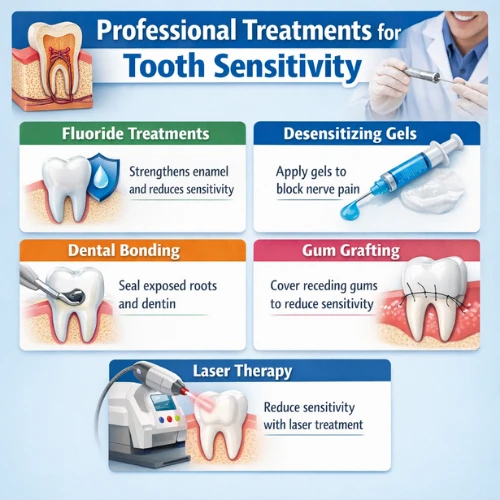
When home care isn’t enough, professional dental treatment can provide targeted and long-lasting relief. The best tooth sensitivity treatment depends on what is causing the problem.
Fluoride Application
Your dentist may apply professional fluoride varnish or gel to strengthen enamel and reduce sensitivity. This is a simple and effective option for mild to moderate cases.
Dental Bonding
If exposed root surfaces or worn areas near the gum line are causing pain, bonding material can be placed over the area to protect it and reduce discomfort.
Gum Treatment
If gum recession is due to gum disease, deep cleaning and periodontal care may be needed. In severe cases, gum grafting may be recommended to cover exposed roots.
Fillings or Restorations
If decay, cracks, or worn fillings are the cause, restoring the tooth can eliminate sensitivity and protect the tooth from further damage.
Bite Adjustment or Night Guard
For patients who grind or clench, correcting bite pressure or using a custom night guard can reduce enamel wear and prevent ongoing irritation.
Root Canal Treatment (In Severe Cases)
If the nerve inside the tooth is inflamed or infected, sensitivity may progress into deeper pain. In these cases, root canal treatment may be necessary to save the tooth and eliminate discomfort.
Why Early Diagnosis Matters
One of the biggest mistakes patients make is assuming sensitivity is “normal.” While occasional mild discomfort can happen, persistent sensitivity is often a warning sign. What starts as enamel wear can progress to cracks, decay, or nerve involvement if ignored.
Early diagnosis allows your dentist to treat the cause before it becomes more complex or expensive. It also helps preserve the natural tooth structure and keeps treatment simpler and more comfortable.
Why Choose Dentistree for Sensitive Teeth Care?
If you are searching for reliable tooth sensitivity treatment in Dubai, it’s important to choose a clinic that looks beyond the symptoms. We take a complete approach, evaluating your enamel, gums, bite, brushing habits, and overall oral health to identify the real reason behind your discomfort.
Our focus is on gentle, patient-centered care with modern diagnostic tools and personalized treatment plans. Whether your sensitivity is caused by enamel erosion, gum recession, decay, or grinding, our team is here to help you eat, drink, and smile with confidence again.
Final Thoughts
Tooth sensitivity may seem minor at first, but it is often a sign that your teeth or gums need attention. Addressing it early can help prevent further discomfort and protect your long-term oral health.
Contact us on WhatsApp for quick assistance:
📍 Al Barsha Branch: +971 58 581 5201
📍 Jumeirah Branch: +971 56 608 4766
If you are experiencing recurring sensitivity, do not ignore it. At Dentistree Dental Clinic, we help identify the cause and guide you toward the right treatment. Book your consultation today.