

 Call Jumeirah
Healthy dental habits in childhood often shape how a person cares for their teeth for years to come. Simple routines like proper brushing, mindful eating, and regular dental check-ups can help children avoid common problems early while making oral care feel easier and less stressful.
Preventative dental care is not just about stopping cavities; it is about creating confidence, consistency, and a positive relationship with dental visits from a young age. At DentisTree Dental Clinic, we focus on helping families build those strong foundations early, so children can grow up with healthier smiles and better habits.
Why Preventive Dental Care Matters in Childhood
Children’s teeth and jaws are constantly developing. Baby teeth guide permanent teeth into place, maintain space in the jaw, and support chewing and speech. When preventive care is neglected, early dental issues can disrupt this natural process.
Preventive dental care helps by:
- Reducing the risk of cavities and gum disease
- Supporting healthy tooth and jaw development
- Preventing pain and dental emergencies
- Encouraging lifelong oral hygiene habits
- Minimising dental anxiety
Most childhood dental problems are preventable with consistent care, education, and early professional guidance.
Understanding Preventive Dental Care for Children
Preventive dental care includes all the steps taken to keep teeth and gums healthy before problems arise. It combines professional dental visits with daily habits at home.
Key elements of preventive dental care for children include:
- Regular dental checkups
- Professional cleanings when appropriate
- Fluoride treatments to strengthen enamel
- Dental sealants to protect molars
- Daily brushing and flossing
- Healthy eating habits
Each element works together to protect children’s oral health as they grow.
Building Dental Habits in Kids Starts Early
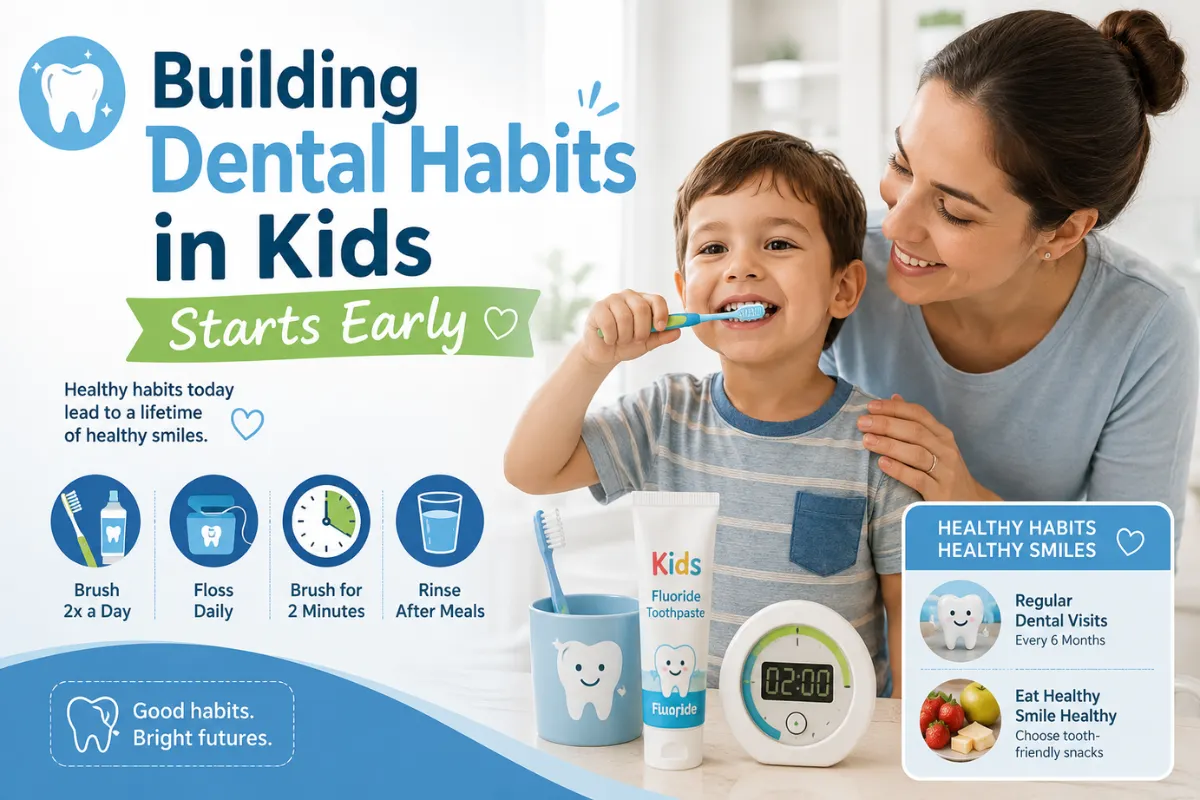
Habits formed during early childhood often last a lifetime. When oral care becomes part of a child’s daily routine, it feels normal rather than forced.
Building dental habits in kids should begin as soon as the first tooth appears. Even before brushing starts, cleaning gums with a soft cloth helps children get used to oral care.
Simple early habits include:
- Brushing twice a day with age-appropriate toothpaste
- Making brushing a routine, not a punishment
- Encouraging rinsing after meals
- Visiting the dentist regularly
Consistency matters more than perfection. Gentle repetition builds confidence and familiarity.
Teaching Children Dental Care at Home
Teaching children dental care works best when it is age-appropriate and positive. Children learn by observing and copying adults, so parental involvement plays a key role.
Making Brushing a Daily Routine
Children respond well to structure. Brushing at the same time every morning and night helps establish consistency.
Tips for parents include:
- Brushing together as a family
- Using a timer or a favourite song to guide brushing time
- Allowing children to choose their toothbrush
- Praising effort rather than focusing on mistakes
Supervision is important until children develop good coordination, usually around six to seven years of age.
Introducing Flossing Gently
Flossing can be introduced once teeth begin to touch. Child-friendly flossers make the process easier and less intimidating.
Early exposure helps children accept flossing as part of normal oral care rather than an extra task.
Kids’ Oral Hygiene Habits and Their Long-Term Impact
Good oral hygiene habits protect children from common dental problems such as cavities and gum inflammation. More importantly, they teach responsibility for personal health.
Strong kids’ oral hygiene habits contribute to:
- Fewer dental visits for treatment
- Reduced discomfort and pain
- Better confidence in social settings
- Healthier eating habits
Children who understand why oral care matters are more likely to follow routines willingly.
The Role of Diet in Preventive Dental Care
Diet plays a major role in preventive dentistry for children. Frequent sugar intake feeds harmful bacteria, increasing the risk of cavities.
Preventive dietary habits include:
- Limiting sugary snacks and drinks
- Encouraging water instead of sweetened beverages
- Offering tooth-friendly snacks like fruits, vegetables, and dairy
- Avoiding constant grazing throughout the day
Timing also matters. Sugary foods consumed with meals are less harmful than frequent snacking between meals.
Professional Preventive Dentistry for Kids in Dubai
Professional dental care supports home routines by identifying risks early and providing protective treatments.
Preventive dentistry for kids in Dubai often includes:
- Routine dental exams
- Professional cleanings
- Fluoride applications
- Dental sealants on molars
- Habit assessments, such as thumb sucking or grinding
These visits help prevent problems rather than reacting to them.
Dental Sealants and Fluoride: Extra Protection for Growing Teeth
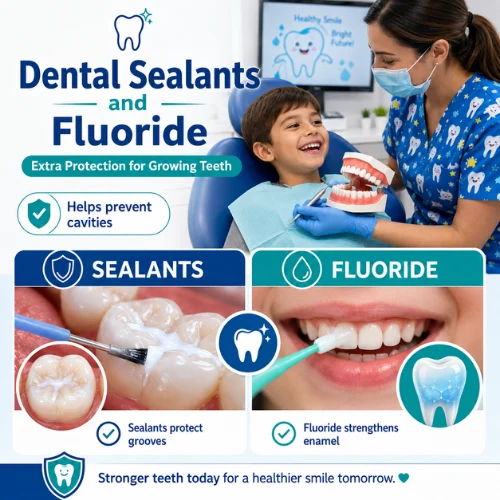
Dental Sealants
Sealants are thin protective coatings applied to the chewing surfaces of molars. These grooves are difficult to clean and prone to cavities.
Sealants:
- Act as a barrier against bacteria
- Reduce cavity risk significantly
- Are painless and quick to apply
They are especially beneficial during the early years of permanent tooth eruption.
Fluoride Treatments
Fluoride strengthens enamel and makes teeth more resistant to acid attacks. Professional fluoride applications provide added protection, especially for children prone to cavities.
Both treatments support preventive care without discomfort.
Preventive Care During Different Growth Stages
Toddlers and Preschoolers
Focus is on:
- Establishing brushing routines
- Managing teething discomfort
- Preventing early childhood cavities
- Addressing habits like pacifier use
School-Age Children
At this stage, preventive care includes:
- Monitoring permanent tooth eruption
- Reinforcing brushing and flossing techniques
- Assessing bite and spacing
- Applying sealants when appropriate
Adolescents
Hormonal changes can increase gum sensitivity. Preventive care focuses on:
- Managing gum health
- Addressing orthodontic hygiene
- Preventing enamel erosion
Each stage requires tailored preventive strategies.
Preventing Dental Anxiety Through Positive Experiences
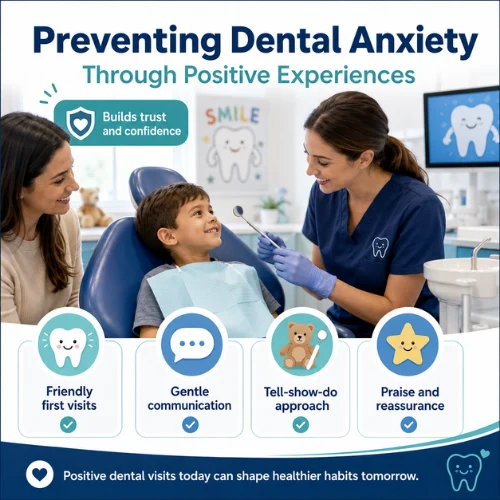
Children who associate dental visits with fear often avoid care later in life. Preventive visits help normalise dental care and build trust.
Positive experiences include:
- Short, non-invasive visits
- Clear explanations in simple language
- Gentle handling
- Encouragement and reassurance
A calm, supportive environment makes a lasting difference.
Common Mistakes That Undermine Preventive Care
Despite best intentions, some habits can weaken preventive efforts.
Common mistakes include:
- Letting children fall asleep with milk or juice
- Frequent snacking on sugary foods
- Skipping dental visits unless there is pain
- Assuming baby teeth do not need care
Preventive education helps parents avoid these pitfalls early.
The Role of Parents in Preventive Dentistry
Parents guide routines, food choices, and dental visits. Their involvement is essential in building strong habits.
Parents can support preventive care by:
- Supervising brushing and flossing
- Scheduling regular dental visits
- Encouraging healthy snacks
- Setting a positive example
Consistency at home combined with professional care leads to the best outcomes.
Long-Term Benefits of Preventive Dental Care in Children
Children who receive consistent preventive care are more likely to:
- Avoid extensive dental treatments
- Maintain healthy teeth into adulthood
- Develop confidence in oral care
- Experience less dental anxiety
Preventive dentistry protects both physical and emotional well-being.
Preventive Philosophy at DentisTree Dental Clinic
Preventive care for children is delivered with patience, education, and a child-friendly approach. The focus is on long-term health rather than short-term treatment.
Each child receives personalised guidance based on age, development, and risk factors. Parents are actively involved in the process, ensuring continuity of care at home.
The aim is to build habits that last well beyond childhood.
When to Start Preventive Dental Care
Preventive care should begin early and continue consistently. If your child has not yet started regular dental visits, it is never too late to begin.
Early evaluation allows guidance, reassurance, and protection before problems develop.
Strong Habits Create Healthy Smiles
Preventive dental care is not about strict rules or perfection. It is about building simple, consistent habits that protect children’s teeth as they grow.
By focusing on prevention, parents give their children the gift of comfort, confidence, and long-term oral health.
Let’s Build Healthy Dental Habits Together
If you want to support your child’s oral health through preventive care and positive routines, DentisTree Dental Clinic Dubai is here to guide you.
Contact us on WhatsApp for quick assistance:
📍 Al Barsha Branch: +971 58 581 5201
📍 Jumeirah Branch: +971 56 608 4766
Healthy smiles are built one habit at a time. Preventive care today shapes confident smiles tomorrow. Book your consultation today!