

 Call Jumeirah
For many patients, hearing the words “root canal” immediately creates anxiety.
You may imagine a painful procedure, several dental appointments, or a tooth that will never feel normal again. Some patients delay treatment because they hope the pain will settle on its own. Others continue taking painkillers or antibiotics without treating the actual problem inside the tooth.
Modern root canal treatment is designed to do the opposite of what many people fear. Its main purpose is to relieve dental pain, remove infection, and save your natural tooth.
When the inside of a tooth becomes inflamed or infected, delaying treatment can make the problem more difficult to manage. Understanding what root canal treatment involves can help you make a timely and informed decision.
Here is what an endodontist in Dubai wants every patient to know before undergoing root canal treatment.
What Is Root Canal Treatment?
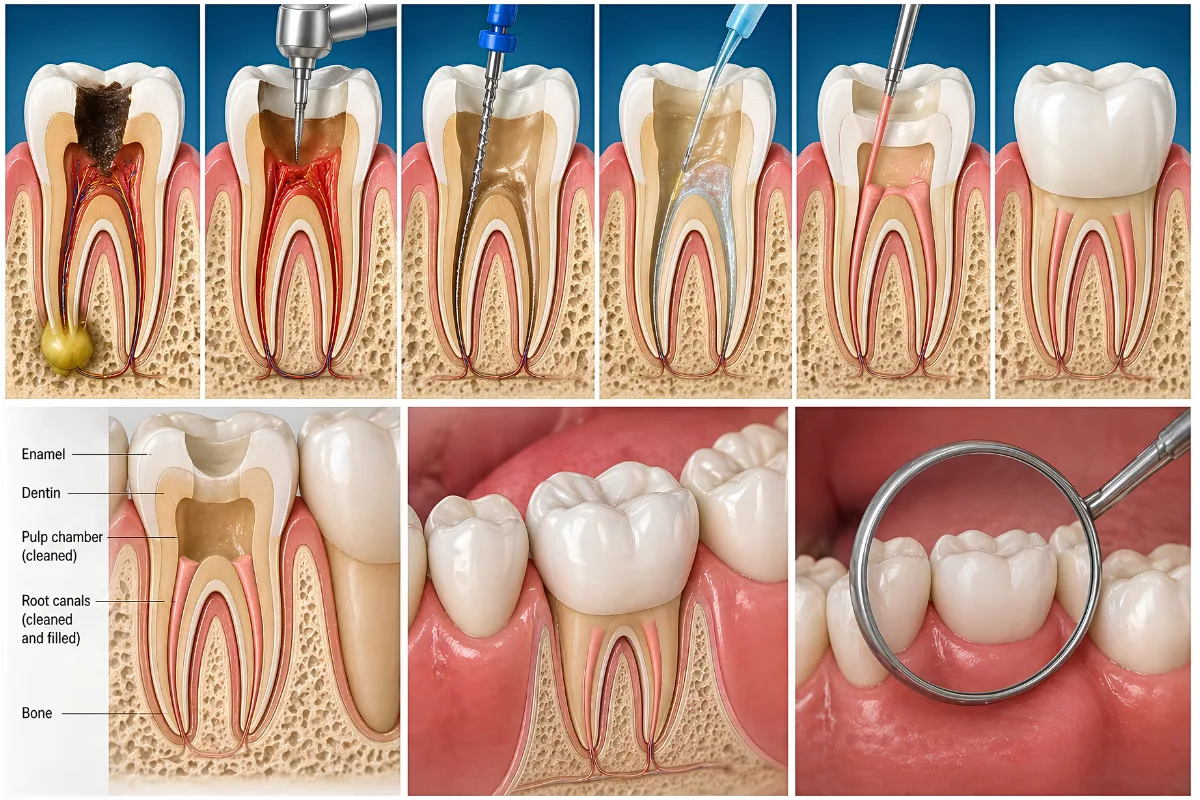
A tooth is not completely solid.
Beneath the outer enamel and dentine is a soft inner area called the dental pulp. The pulp contains nerves, blood vessels, and connective tissue. It extends from the centre of the tooth into narrow spaces inside the roots known as root canals.
When the pulp becomes severely inflamed, damaged, or infected, it may no longer be able to heal on its own.
During root canal treatment, the dentist or endodontist:
- Removes the inflamed or infected pulp
- Cleans and disinfects the inside of the tooth
- Shapes the root canals
- Fills and seals the cleaned spaces
- Restores the tooth with a filling or crown
After treatment and final restoration, the tooth can continue functioning like a natural tooth.
What Is an Endodontist?
An endodontist is a dentist who focuses on diagnosing and treating conditions affecting the dental pulp, the root canals, and the tissues surrounding the roots of teeth.
Endodontists commonly manage:
- Root canal treatment
- Persistent or difficult-to-locate tooth pain
- Previously unsuccessful root canal treatment
- Root canal retreatment
- Cracked teeth
- Dental injuries and trauma
- Infection around the root of a tooth
- Endodontic surgery
Some root canal treatments are relatively straightforward. Others involve narrow, curved, blocked, or unusual canals that may require specialist assessment, magnification, advanced imaging, and careful treatment planning.
When patients search for an Endodontist Dubai, they are often experiencing severe tooth pain, a complicated infection, or discomfort in a tooth that has already undergone treatment.
Why Would a Tooth Need Root Canal Treatment?
Root canal treatment may be recommended when the pulp inside a tooth becomes inflamed, infected, or damaged.
Common causes include:
Deep Tooth Decay
When decay progresses through the enamel and dentine, bacteria can eventually reach the pulp.
At this stage, a regular filling may no longer be enough because the infection is no longer limited to the outer part of the tooth.
A Cracked or Chipped Tooth
A crack can allow bacteria to enter the inside of the tooth.
Some cracks are clearly visible, while others are extremely small and difficult to detect. Patients with a cracked tooth may experience sharp pain while chewing, especially when releasing the bite, or sensitivity to hot and cold temperatures.
Repeated Dental Treatment
A tooth that has undergone several fillings or other dental procedures may develop irritation or inflammation in the pulp.
This does not mean that previous treatment was necessarily performed incorrectly. Repeated work on the same tooth can sometimes place stress on the pulp over time.
Dental Trauma
A fall, sporting injury, accident, or blow to the face can damage the pulp even when the tooth does not appear broken.
In some cases, symptoms develop immediately. In others, the tooth may gradually darken or become painful months or even years after the injury.
A Loose or Damaged Crown
A poorly sealed, loose, or fractured restoration may allow bacteria to reach the inner part of the tooth.
Root canal treatment may then be needed before the tooth can be restored.
What Are the Signs That You May Need a Root Canal?
Not every toothache requires root canal treatment. However, certain symptoms should not be ignored.
1. Severe Pain While Biting or Chewing
Pain when pressure is placed on a tooth may indicate inflammation around the root, deep decay, or a crack.
The pain may feel sharp, throbbing, or difficult to localise.
2. Sensitivity That Continues After Hot or Cold Food
It is normal to experience brief sensitivity occasionally.
However, if pain continues for several seconds or minutes after the hot or cold item has been removed, the pulp may be significantly inflamed.
3. A Pimple on the Gum
A small bump resembling a pimple may develop near an infected tooth.
It may release fluid, disappear, and then return. Even when it is not painful, it can indicate an infection draining through the gum.
4. Swollen or Tender Gums
Swelling near a specific tooth may be associated with infection around the root.
The swelling may remain localised or spread into the cheek, jaw, or face.
5. A Chipped or Cracked Tooth
A damaged tooth should be assessed even if the pain is mild or intermittent.
Small cracks can become larger, and bacteria may enter the pulp through the damaged tooth structure.
6. Tooth Darkening
A tooth may become grey, brown, or darker than the surrounding teeth after trauma or pulp damage.
Discolouration alone does not confirm that root canal treatment is required, but it should be examined.
7. Persistent or Spontaneous Toothache
Pain that begins without eating, drinking, or touching the tooth may indicate significant pulp inflammation.
The pain may also disturb your sleep or become worse when lying down.
These symptoms can suggest pulp or root canal disease, but an examination and dental imaging are needed to confirm the diagnosis.
Can You Need a Root Canal Without Having Pain?
Yes.
Some teeth that require root canal treatment do not cause obvious pain.
The pulp may gradually lose its blood supply and die. Once the nerve tissue is no longer functioning, the initial pain may reduce. However, bacteria can remain inside the tooth and cause infection around the root.
The problem may then be identified during:
- A routine dental examination
- An X-ray
- Evaluation of tooth discolouration
- Assessment of a gum swelling
- Treatment of a broken filling or crown
A lack of pain does not always mean that a tooth is healthy. An endodontist uses clinical tests and imaging to assess whether the pulp is inflamed, infected, or no longer alive.
What Happens During Root Canal Treatment?
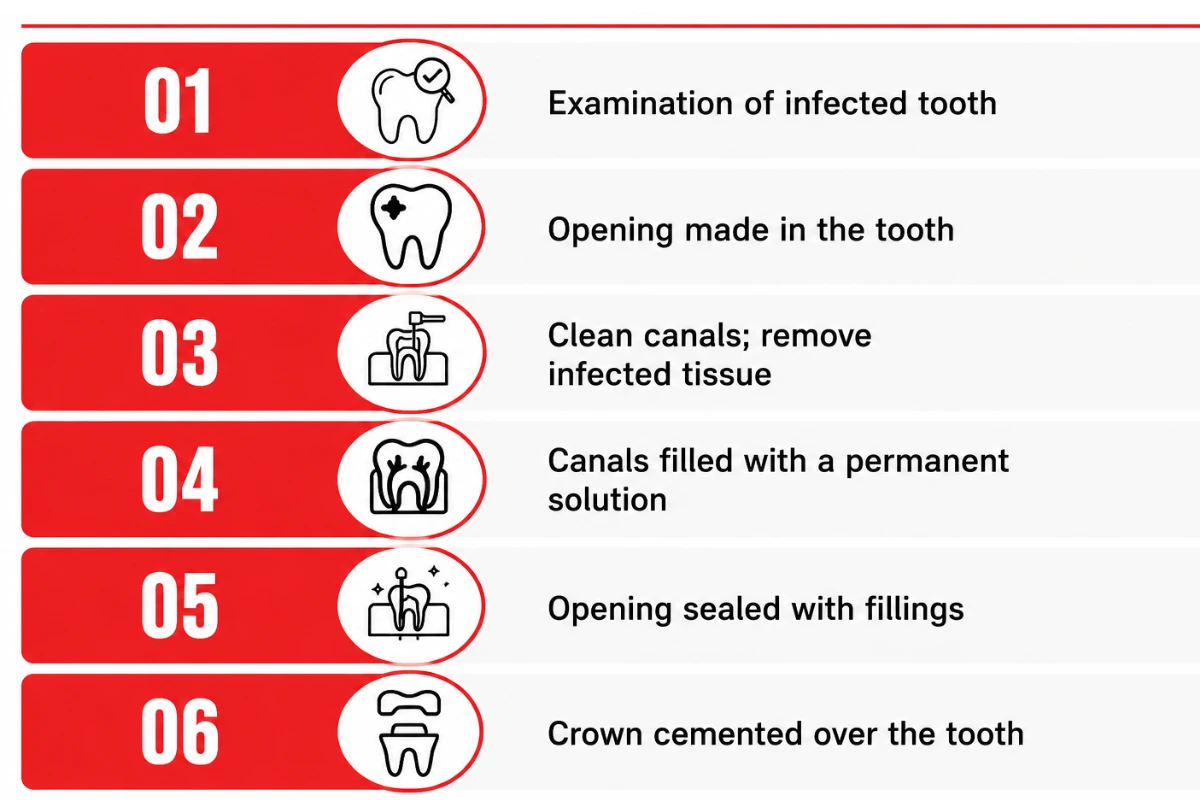
Every tooth is different, but root canal treatment generally follows a series of carefully planned steps.
Step 1: Examination and Diagnosis
Your dentist or endodontist will ask about your symptoms and examine the tooth.
Tests may include:
- Tapping or applying pressure to the tooth
- Testing the response to cold
- Checking the gums
- Assessing the bite
- Examining for cracks
- Taking dental X-rays
These tests help determine whether the pain is coming from the pulp, the gum, the surrounding bone, a neighbouring tooth, or another area.
Step 2: Local Anaesthesia
Local anaesthetic is administered to numb the tooth and surrounding area.
Modern root canal procedures are performed with the aim of keeping the patient comfortable. Many patients find the experience similar to having a filling, although the appointment may take longer.
Step 3: Isolation of the Tooth
A small protective sheet known as a dental dam is placed around the tooth.
This keeps the tooth clean and dry, prevents saliva from entering the treatment area, and protects the surrounding tissues.
Step 4: Accessing the Root Canals
A small opening is made through the top of the tooth to reach the pulp chamber and root canals.
Very fine instruments are used to remove the inflamed or infected tissue.
Step 5: Cleaning and Shaping
The canals are carefully cleaned, disinfected, and shaped.
This is one of the most important stages of treatment because root canals can be narrow, curved, or complex. Some teeth have additional canals that may be difficult to identify without magnification and detailed imaging.
Step 6: Filling and Sealing the Canals
Once the canals have been cleaned and prepared, they are filled with a biocompatible material, commonly a rubber-like material called gutta-percha.
The space is then sealed to reduce the risk of bacteria re-entering the canals.
Step 7: Restoring the Tooth
A temporary or permanent filling may be placed after the root canal procedure.
In many cases, particularly for back teeth, a crown or another strong restoration is recommended to protect the tooth and restore its function.
Is Root Canal Treatment Painful?
This is the question patients ask most often.
Root canal treatment is generally performed to relieve the pain caused by an inflamed or infected tooth. With appropriate local anaesthesia and modern techniques, most patients report being comfortable during the procedure.
You may feel pressure, movement, or vibration during treatment, but you should not simply tolerate sharp pain. Tell your dentist or endodontist if you feel uncomfortable so the anaesthesia or treatment approach can be adjusted.
After the appointment, the area may feel tender for a few days, especially if there was significant pain or infection before treatment.
This discomfort is usually manageable with medication recommended by your dentist. Severe or increasing pain is not something you should ignore.
How Many Appointments Does a Root Canal Require?
Root canal treatment may sometimes be completed in one appointment. In other situations, two or more visits may be required.
The number of appointments depends on:
- Which tooth is being treated
- The number and shape of the canals
- The extent of infection
- Whether swelling is present
- Whether the tooth has been treated before
- Whether medication needs to be placed inside the tooth
- The complexity of the tooth anatomy
- The type of final restoration required
A molar usually has more canals than a front tooth and may therefore take longer to treat.
The aim is not simply to finish the procedure quickly. The priority is to clean, disinfect, and seal the tooth as effectively as possible.
Will You Need a Crown After Root Canal Treatment?
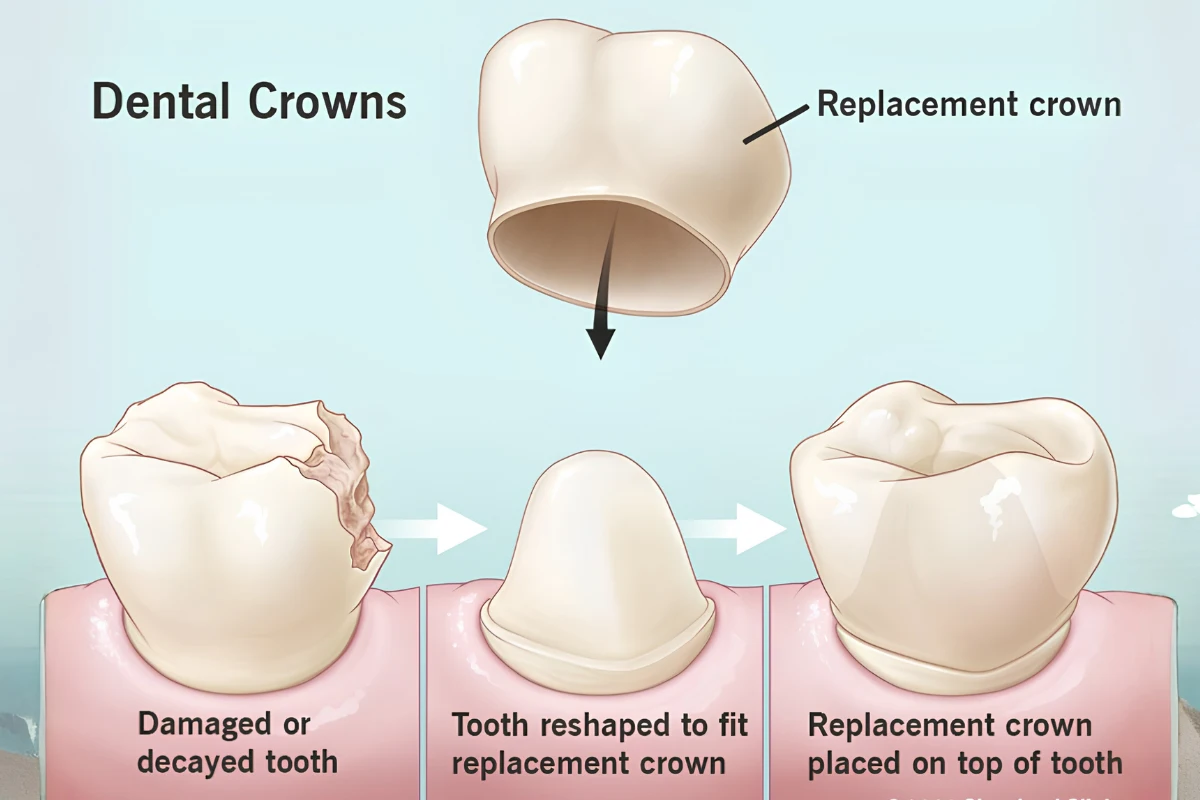
Not every root canal-treated tooth requires the same restoration.
Back teeth, such as premolars and molars, absorb significant pressure while chewing. They commonly require a crown or another protective restoration after root canal treatment.
Front teeth may not always need a crown if enough healthy tooth structure remains.
The decision depends on:
- The location of the tooth
- The amount of remaining tooth structure
- Whether the tooth has a large filling
- The strength of the tooth
- Your bite
- Whether you grind or clench your teeth
- The presence of any cracks
A root canal treats the inside of the tooth. The final filling or crown protects the outside.
Delaying the final restoration may expose the tooth to fracture or allow bacteria to enter through a leaking temporary filling.
What Should You Expect After Root Canal Treatment?
Mild tenderness or sensitivity for a few days can occur after treatment.
The tooth may feel slightly different when you bite because the tissues surrounding the root have been inflamed. This usually improves as healing progresses.
Follow the instructions provided by your dentist or endodontist. General aftercare may include:
- Avoid eating until the numbness has worn off
- Avoid chewing hard food on the treated tooth
- Brush and clean between your teeth as advised
- Take prescribed or recommended medication correctly
- Attend your follow-up appointment
- Arrange the permanent filling or crown without unnecessary delay
Until the final restoration has been placed, avoid using the treated tooth to bite hard foods. An unrestored tooth can be more vulnerable to fracture.
When Should You Contact Your Dentist After Treatment?
Contact your dental clinic if you notice:
- Severe pain or pressure lasting more than a few days
- Pain that is becoming worse rather than improving
- Visible swelling inside or outside the mouth
- The return of your original symptoms
- A bite that feels uneven
- A temporary filling or crown that has come out
- A rash, itching, or another possible reaction to medication
Do not wait for a scheduled review if you are concerned about increasing pain or swelling.
Can Antibiotics Replace Root Canal Treatment?
Usually, no.
Antibiotics do not remove infected or damaged pulp from inside the tooth. They also do not clean and seal the root canal system.
Definitive dental treatment is generally needed to remove the source of infection. Antibiotics may be prescribed as an additional measure when there are signs that infection is spreading or affecting the patient more generally, such as fever, malaise, facial swelling, cellulitis, or swollen lymph nodes.
Repeatedly taking antibiotics without treating the tooth can delay necessary care.
Never take leftover antibiotics or medication prescribed for another person. The dentist should decide whether antibiotics are needed after assessing your symptoms, medical history, and the extent of infection.
Is It Better to Have a Root Canal or Remove the Tooth?
The answer depends on whether the tooth can be predictably restored and maintained.
When possible, saving a natural tooth can help preserve:
- Normal chewing
- Natural appearance
- Jaw function
- The position of neighbouring teeth
- Your existing bite
Removing a tooth may appear to be a quicker solution, but the missing tooth may later need to be replaced with a dental implant, bridge, or removable prosthesis.
However, not every tooth can be saved. Extraction may be recommended when:
- The root has a severe vertical fracture
- Too little healthy tooth structure remains
- The tooth has inadequate bone support
- The canals cannot be accessed or treated
- The tooth cannot be restored
- The overall prognosis is poor
An endodontic assessment can help determine whether root canal treatment, retreatment, surgery, or extraction is the most appropriate option.
Can a Root Canal-Treated Tooth Become Infected Again?
Yes, although this does not happen to every treated tooth.
A previously treated tooth may develop a new problem months or years later because of:
- Untreated narrow or curved canals
- Complex anatomy that was not detected initially
- Delayed placement of the final restoration
- Leakage beneath a filling or crown
- New tooth decay
- A cracked or broken restoration
- New dental trauma
- A fracture in the tooth
When a previous root canal does not heal as expected, the tooth may still be saved through root canal retreatment.
During retreatment, the old filling material is removed, the canals are examined and cleaned again, and the tooth is resealed. In some cases, endodontic surgery may be considered.
When Should You See an Endodontist in Dubai?
Your general dentist may refer you to an endodontist when the tooth requires specialist evaluation or more complex treatment.
You may benefit from seeing an endodontist in Dubai if:
- Your toothache is severe or difficult to diagnose
- You have lingering sensitivity to hot or cold
- You experience pain while biting
- A tooth is cracked or has suffered trauma
- You have swelling or a dental abscess
- Your tooth has unusual or complex root anatomy
- A previous root canal has not healed
- Pain has returned in a root canal-treated tooth
- You have been advised to remove a tooth and want to know whether it can be saved
- Your dentist has recommended specialist root canal care
Early assessment can sometimes give the dentist more treatment options. Waiting until the tooth breaks further or the infection spreads may reduce the possibility of saving it.
When Is Tooth Pain an Emergency?
Seek prompt dental attention if you have severe pain, rapidly increasing swelling, facial swelling, fever, or signs that an infection is spreading.
Difficulty breathing or swallowing, swelling affecting the airway, or rapidly progressing facial or neck swelling requires urgent emergency assessment.
An abscess should not be ignored simply because it drains or the pain temporarily decreases. Infection may still remain around the root of the tooth.
Common Root Canal Myths
Myth 1: Root Canal Treatment Causes Pain
The infection or inflammation inside the tooth is usually the source of the pain.
Root canal treatment is performed to remove the affected tissue and relieve that pain.
Myth 2: Extraction Is Always Easier
Extraction removes the tooth, but it does not automatically complete your dental treatment.
You may need further treatment to replace the missing tooth and maintain your bite.
Myth 3: If the Pain Stops, the Tooth Has Healed
Pain can decrease when the pulp dies, but the infection may remain and continue affecting the tissues surrounding the root.
Myth 4: Antibiotics Will Cure the Tooth
Antibiotics may help manage selected spreading infections, but they do not clean infected tissue from inside a root canal.
Myth 5: A Root Canal-Treated Tooth Is Useless
Once properly treated and restored, the tooth can continue to support normal biting and chewing.
How Can You Reduce the Risk of Needing a Root Canal?
Not every root canal can be prevented, especially when a tooth is damaged by trauma. However, you can reduce certain risks by:
- Brushing twice daily with fluoride toothpaste
- Cleaning between your teeth every day
- Attending regular dental check-ups
- Treating cavities before they become deep
- Replacing broken or leaking fillings
- Wearing a mouthguard during contact sports
- Seeking care promptly after dental trauma
- Avoiding chewing ice and very hard objects
- Managing teeth grinding or clenching
- Not delaying treatment for persistent sensitivity or pain
Early treatment may allow a smaller filling or another conservative procedure before the pulp becomes permanently damaged.
Do Not Wait for Tooth Pain to Become Unbearable
A tooth does not need to be severely painful before it deserves attention.
Lingering sensitivity, discomfort while chewing, gum swelling, tooth darkening, a recurring gum pimple, or pain in a previously treated tooth can all indicate a deeper problem.
Root canal treatment is not simply about removing a nerve. It is about controlling infection, relieving pain, and giving the natural tooth an opportunity to remain functional.
If you are experiencing persistent tooth pain or have been advised to undergo root canal treatment, a proper assessment can clarify the diagnosis and explain your available options.
Looking for an experienced Endodontist in Dubai? Book a consultation at Dentistree for a detailed assessment, personalised treatment plan, and specialist care focused on relieving pain and saving your natural tooth whenever possible.
Frequently Asked Questions About Root Canal Treatment
How long does root canal treatment take?
Appointment length depends on the tooth and the complexity of its canals. A straightforward front tooth may take less time than a molar with several curved canals.
Can I drive after root canal treatment?
Most root canal procedures are performed using local anaesthesia, and patients can usually drive afterwards. However, arrangements may be different if sedation is used. Follow the specific advice provided by your clinic.
Can I go to work after a root canal?
Many patients return to their normal routine after treatment. You may prefer to rest if you have had a long appointment, significant infection, swelling, or sedation.
Can I eat after treatment?
Wait until the numbness has worn off to reduce the risk of biting your cheek, lip, or tongue. Choose softer food and avoid chewing directly on the treated tooth until your dentist advises otherwise.
How long does a root canal-treated tooth last?
A properly treated, restored, and maintained tooth can remain functional for many years. Long-term success also depends on the tooth’s original condition, the quality of the final restoration, oral hygiene, bite forces, and regular dental care.
Does a root canal remove the entire tooth?
No. Root canal treatment removes the affected pulp from inside the tooth. The natural tooth remains in the mouth and is restored for continued use.
Will the tooth look different after treatment?
The appearance depends on the tooth’s original condition and the final restoration. A crown, filling, or other restoration may be used to rebuild the tooth. If a front tooth has darkened, your dentist can discuss suitable cosmetic options.