

 Call Jumeirah
A clicking sound while opening your mouth, discomfort while chewing, or a feeling that your jaw is getting stuck can be concerning. Many people experience these symptoms but are unsure whether they are normal or signs of a deeper problem.
These symptoms may be related to disorders affecting the temporomandibular joint (TMJ), the joint that connects your lower jaw to your skull.
The TMJ plays an important role in everyday activities such as eating, speaking, swallowing, and yawning. Because it is constantly used throughout the day, problems affecting this joint or the surrounding muscles can sometimes lead to discomfort and restricted movement.
Understanding why your jaw clicks, locks, or hurts can help you recognise when professional dental advice may be needed and what treatment options may be considered.
What Is the Temporomandibular Joint (TMJ)?
The temporomandibular joint is a small but complex joint located on both sides of your face, just in front of your ears.
It allows your lower jaw to perform different movements, including:
- Opening and closing your mouth
- Moving your jaw forward and backwards
- Side-to-side movements during chewing
Unlike many other joints, the TMJ combines both rotational and sliding movements. Inside the joint, a small cartilage disc helps the jaw move smoothly and reduces friction.
When the joint, disc, muscles, or surrounding structures become affected, it can result in a group of conditions known as temporomandibular joint disorders (TMD).
What Are TMJ Disorders?
TMJ disorders refer to problems affecting:
- The jaw joint
- The muscles responsible for jaw movement
- The cartilage disc inside the joint
- The surrounding tissues
These disorders can develop gradually and may range from mild symptoms, such as occasional clicking, to more noticeable concerns like jaw pain, stiffness, or difficulty opening the mouth.
Not every jaw sound means there is a serious problem. Some people experience clicking without pain or limitation. However, when sounds are accompanied by discomfort or changes in jaw function, it is worth getting the condition evaluated.
Why Does My Jaw Click When Chewing?
One of the most common concerns patients report is jaw clicking when chewing.
A clicking or popping sensation may occur when the disc inside the TMJ does not move smoothly with the jaw. When the disc shifts and returns during movement, it can create a clicking sound.
Some common reasons behind jaw clicking include:
1. Movement of the Jaw Joint Disc
The TMJ contains a small disc that acts as a cushion between the bones of the joint. If this disc moves slightly out of its normal position, it may cause clicking during jaw movement.
In some cases, this may not cause pain. However, if the movement progresses or affects jaw function, further assessment may be recommended.
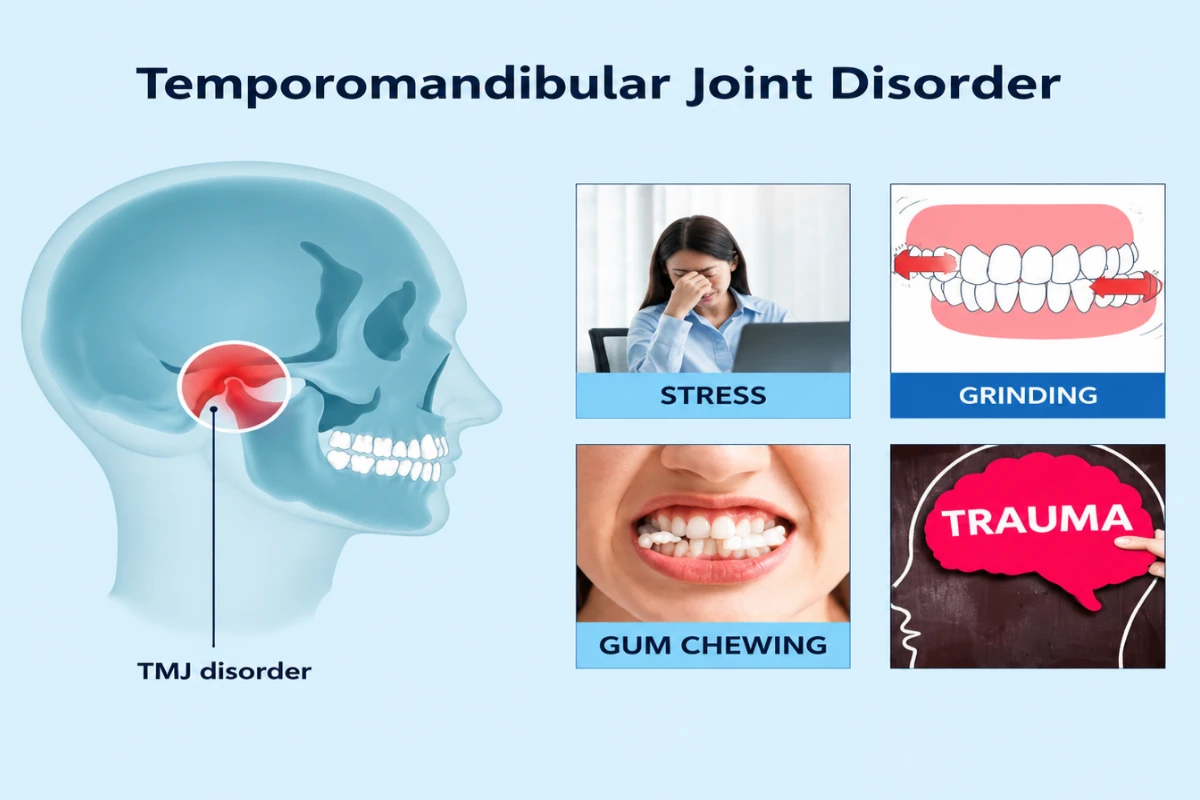
2. Teeth Grinding and Jaw Clenching
Many people unconsciously clench their jaw during stressful periods or grind their teeth while sleeping.
This repeated pressure can place extra strain on:
- Jaw muscles
- Teeth
- TMJ structures
Over time, it may contribute to jaw soreness, facial muscle fatigue, or discomfort while chewing.
3. Jaw Injury or Trauma
A previous injury to the jaw or face may affect how the joint moves.
Even after the initial injury has healed, some people may notice changes such as:
- Clicking sounds
- Limited opening
- Joint discomfort
4. Arthritis Affecting the Jaw Joint
Like other joints in the body, the TMJ can be affected by conditions such as osteoarthritis.
Changes within the joint may lead to:
- Stiffness
- Pain during movement
- Reduced jaw mobility
5. Bite and Jaw Alignment Factors
The way your upper and lower teeth come together can influence how pressure is distributed across the jaw.
In some individuals, bite-related factors may contribute to increased stress on the jaw muscles or joint.
Common Symptoms of TMJ Disorders
TMJ disorders do not always present the same way. Symptoms may include:
Jaw Pain or Tenderness
Pain may be felt:
- Around the jaw joint
- Near the ear area
- In the cheeks
- Around the temples
Some people experience discomfort only during chewing, while others may notice ongoing soreness.
Jaw Clicking or Popping Sounds
A clicking sound during opening or closing of the mouth is a common symptom.
However, the importance of the clicking depends on whether it is associated with:
- Pain
- Locking
- Limited movement
- Changes in bite
Jaw Locking
Some people experience a sensation where their jaw temporarily becomes difficult to open or close.
Jaw locking may happen because of changes in joint movement and should be assessed if it occurs repeatedly.
Difficulty Chewing
Pain, stiffness, or reduced jaw movement may make eating certain foods uncomfortable.
Some individuals may begin avoiding harder foods because of discomfort.
Headaches and Facial Muscle Tension
The muscles involved in chewing are closely connected with facial movement.
In some cases, increased muscle tension around the jaw may contribute to headaches or facial discomfort.
What Are the Common Jaw Pain Causes?
Jaw pain can happen for several reasons, and TMJ disorders are only one possible cause.
Other jaw pain causes may include:
- Tooth infection or dental abscess
- Gum-related problems
- Teeth grinding
- Jaw injury
- Sinus-related discomfort
- Muscle tension
- Arthritis
- Problems related to bite or jaw function
Because several conditions can cause similar symptoms, identifying the actual cause is an important part of planning appropriate care.
When Should You Get Your Jaw Checked?
A dental evaluation may be helpful if you experience:
- Persistent jaw pain
- Difficulty opening your mouth normally
- Frequent jaw locking
- Pain while chewing
- Clicking associated with discomfort
- Changes in the way your teeth come together
- Facial pain linked with jaw movement
Early assessment can help understand whether symptoms are related to the TMJ, teeth, muscles, or another dental concern.
How Are TMJ Disorders Diagnosed?
Diagnosis usually begins with a detailed dental assessment.
A dental professional may evaluate:
- Your jaw movement
- Areas of tenderness
- Clicking or locking patterns
- Teeth grinding signs
- Bite relationship
- Dental health
In certain situations, imaging may be recommended to better understand the condition of the joint structures.
At Dentistree, TMJ concerns are approached by first understanding the patient’s symptoms, dental history, and jaw function before considering suitable management options.
The focus is on identifying the underlying cause rather than treating only the symptom.
TMJ Treatment Options
The approach for managing TMJ disorders depends on:
- The cause of symptoms
- Severity of discomfort
- Impact on daily activities
- Overall dental and jaw health
Treatment may include:
Lifestyle Adjustments
Some simple changes may help reduce stress on the jaw, such as:
- Avoiding excessive chewing of hard foods
- Limiting unnecessary jaw movements
- Being aware of jaw clenching habits
- Following relaxation techniques if stress contributes to tension
Customised Night Guards
For individuals who grind or clench their teeth, a customised dental appliance may be considered.
These appliances are designed to reduce excessive contact between teeth and help protect teeth from grinding forces.
Jaw Exercises and Physiotherapy
Certain patients may benefit from guided exercises or physiotherapy techniques that focus on improving jaw movement and reducing muscle tension.
These should be performed based on professional advice to ensure they are suitable for the individual condition.
Dental Treatments When Required
If symptoms are related to dental factors such as damaged teeth, bite concerns, or other oral health issues, addressing those concerns may form part of the overall treatment plan.
How Dentistree Approaches TMJ Concerns
At Dentistree, the approach to jaw joint concerns focuses on understanding each patient’s individual symptoms and daily challenges.
TMJ-related discomfort can have different causes, which is why assessment plays an important role before recommending any treatment approach.
The dental team evaluates factors such as jaw movement, dental health, bite patterns, and possible contributing habits to help patients understand their condition and available options.
The goal is to support better jaw function, comfort, and long-term oral health through personalised care.
Can TMJ Disorders Be Prevented?
While not every TMJ condition can be prevented, certain habits may help reduce unnecessary stress on the jaw.
These include:
- Avoiding frequent jaw clenching
- Managing stress-related muscle tension
- Maintaining good posture
- Avoiding excessive gum chewing
- Seeking dental advice for ongoing symptoms
Conclusion
Your jaw joint supports many essential daily functions, from eating and speaking to facial expressions. If you notice jaw clicking when chewing, recurring jaw pain, or episodes of jaw locking, understanding the cause can help you make informed decisions about your oral health.
TMJ symptoms can have different underlying reasons, and a proper dental evaluation helps determine the most appropriate approach.
If you are experiencing symptoms related to the jaw joint, consulting a dental professional experienced in TMJ treatment in Dubai can help you understand your condition and explore suitable management options.
Frequently Asked Questions About TMJ Disorders
1. Is jaw clicking always a sign of a TMJ problem?
No. Some people have painless clicking without significant joint problems. However, clicking with pain, locking, or restricted movement should be evaluated.
2. Can TMJ disorders improve without treatment?
Mild symptoms may improve with self-care measures. Persistent symptoms may require professional assessment to understand the underlying cause.
3. Does TMJ treatment always require surgery?
No. Many TMJ conditions can be managed with conservative approaches. Treatment depends on the specific diagnosis and individual needs.
4. Can stress affect the jaw joint?
Yes. Stress can contribute to jaw clenching and muscle tension, which may increase pressure on the TMJ.